Easy piano arrangement: Click here
In 1895, James Thornton wrote "The Streets of Cairo or The Poor Little Country Maid," which uses the hutchy-kuthcy melody for the verses, with a chorus in the relative major key. When I first began researching the song, I had a lot of difficulty finding a recording, so I decided to make the one above as a reference recording for others that might be interested in the song's history. I based it on two different piano/vocal arrangements of the tune (the only two I could find). I took the parts that I liked most from each arrangement and rearranged it and made some very minor edits that I felt made more musical sense. On July 27, 2013, my recording of "The Streets of Cairo or the Poor Little Country Maid" was played on the Dr. Demento Show. Later on, I found the original publication of the public domain 1895 sheet music at https://jscholarship.library.jhu.edu/handle/1774.2/31253. I also eventually located the original recording of the song by Dan W. Quinn from 1895, which features a slightly different arrangement, but is in most respects the same as the sheet music. With the assistance of Barret Hansen (Dr. Demento), and his incredible knowledge of recorded music, I have taken the recording of the early Berliner record and adjusted it to the approrpiate speed so that it sounds in the original D minor/F major.
A large number of popular songs have borrowed the hutchy-kutchy melody including Steve Martin's "King Tut" and "Istanbul not Constantinople" by Four Lads and They Might be Giants. More information on the history of the borrowing of this melody can be found in the Wikipedia article about the Arabian Riff.
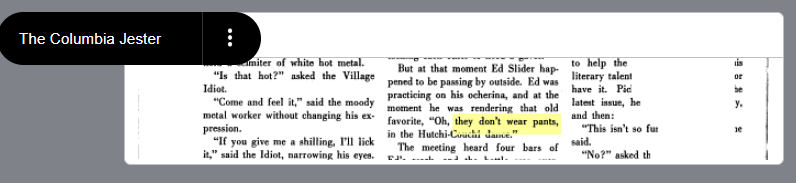
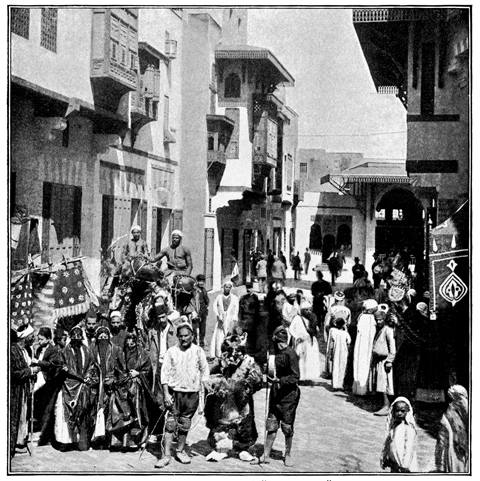
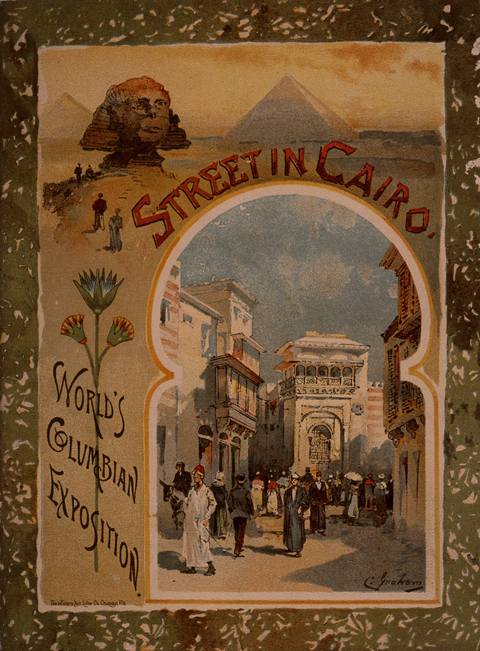
Parody lyrics of this tune are quite prominent. I personally remember learning some on the school playground in the 1980s. My belief is that different versions of these parody lyrics may go all the way back to the time of the World's Columbian Exposition in 1893. After all, this melody was playing over and over at the Street in Cairo exhibit, which was right next to the fair's biggest attraction - the world's first Ferris Wheel. Millions of people from all over the world rode the wheel, which explains why this song is so ubiquitous, yet few people know what it is called. So far, I have traced parody lyrics as far back as 1934. If you can find any earlier instances, please e-mail me at the address below!
 Compositions/Arrangements Compositions/Arrangements | Full-Length Musicals | Children's Musicals |
| Piano Performance | Musical Resources | Home |

